 Review mining
Make visibility the real lever
of your growth
From a single-app team to a banking app live in dozens of countries, everyone works in the same panel; every country is tracked separately.
WORKS ACROSS EVERY APP STORE CATEGORY


The shape of search in this category
In finance apps trust carries half the rank. The other half is knowing which words people use to talk about money.
There are two separate search languages in finance and they are very different. The first is institutional: "budget management", "expense tracking", "portfolio analysis". The second is everyday: "where is my money going", "never makes it to payday", "how much did I spend".
Nearly every metadata is written in the first language while a real share of the searching happens in the second. The gap between them is this category's largest opening - and the only place you can see it is rival reviews.
The second distinguishing feature is trust. Rating score is more decisive here than in most categories: a drop after a release weakens your strength across every phrase at once. When your ranks fall together, the first place to look is not metadata but the rating curve.
The third is locality. Payment methods, bank names and tax terms are country-specific. In this category copying one country's metadata into another wastes one of the two outright.
The four numbers worth measuring here
Category competition is not measured by the number of apps. A category can hold thousands and most of them never appear in the first 200 for anything. What has to be measured is how many apps actually show up for the phrases you are aiming at.
- DensityHow many apps appear in the first 200 for a phrase. High density does not mean the phrase is valuable - it is often the accumulation of stale metadata. It is always read alongside popularity.
- Title shareHow many of the top 20 carry the phrase in their app name. High means a title fight is under way and entering from the subtitle will be slow. Low means the phrase is coming from the keyword field - a cheaper door.
- Strength thresholdThe median rating count of the top 10. Far above yours and the phrase is not taken with metadata; the work has moved to the product. That single number prevents months spent for nothing.
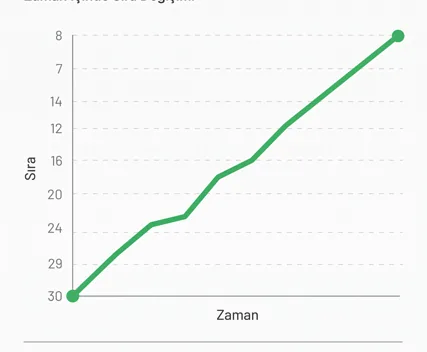
- Band spreadWhich rank bands the apps cluster in. An empty 11-30 means entering it is cheap and whoever gets in stays a while; a full one means every place is traded with somebody.
Five ways into a crowded category
The measurement is done and the category came out crowded. That does not mean stay out; it means change how you go in.
First, niche phrases. Three-word phrases are searched less but their relevance is very high and competition is low. Alone they bring little traffic; gathered in clusters they produce a real total.
Second, country selection. A phrase's density varies widely by country. One crowded in a large market can be nearly empty in a smaller one - the same metadata, a different result.
Third, rival reviews. In crowded categories everyone feeds from the same pool. Users' own words are not in that pool and nobody looks there.
Fourth, empty country fields. The first move in a storefront where you get downloads but the keyword field was never filled is usually the highest-return move there is, because it builds relevance from nothing.
Fifth, waiting. If the strength threshold is far above you there is little distance to take with metadata; what ASO should say is that the work has moved to the product - and it should say it.
- Gather niche phrases in clusters; little apart, a lot together.
- Country selection is a strategy on its own.
- Rival reviews are the most valuable source in a crowded category.
- An empty country field: the highest-return first move.
- If the strength threshold is out of reach, ASO stops and says so.
How the weekly loop runs here
Whatever the category, the loop is the same and takes about two and a half hours a week.
Monday you look at the measurement: what did the tracked phrases and the rivals do? The control group's total movement is that week's market movement.
Tuesday the band comes out: the 11-30 phrases ordered by popularity, the ones above the strength threshold set aside. One of the top three is chosen.
Wednesday one move is made: one field in one release. Changing two fields at once makes it impossible to tell which one carried.
Thursday and Friday you wait: the index takes a few days to settle, longer in some countries. The following Monday you compare - subtract the control group's movement and write what is left down to the move.
The real output of that loop is not the ranks won, it is the record accumulating. Three months in you know which kind of move works for your app - and that is in no general guide, because it belongs to your app.
Frequently asked
- There are thousands of apps in my category. Is it hopeless?
- No. App count is not the measure of competition; most never appear in the first 200 for anything. What matters is how many actually show up for the phrases you are aiming at.
- Which phrase should I start with?
- One you already rank 11-30 for, whose popularity could be measured, and whose strength threshold is reachable. The most popular phrase where all three hold is this week's work.
- How long until I see a result?
- The first measurable one usually lands in the second month: one move, the index settling, and a week's comparison. Meaningful learning takes three months.
- How many countries should I start in?
- One. Run the loop for a month where you get the most downloads, then add the second. Starting in ten at once ends with measurement in none of them.
ASO is an investment whose return can be measured.
Lighten the load of keyword research and metadata upkeep
Cut the number of people the process needs
Cut the hours that go into keyword research
Multiply your team's output with machine-assisted analysis
A partnership programme
built for growth.
With rankcusp Pro our partners draw up, for every app they manage, the plan that carries its 11-30 keywords into the top 10.
Become a partner
the rankcusp team
data.ai





More about ASO

rankcusp Publications
Read our writing and our analyses, and learn in depth how App Store search works.

FREE TOOL
It estimates the return on your ASO work
TECHNICAL REPORT
A Technical Report on the Cusp Band

GUIDE
Why App Store Visibility Is Your Next Growth Lever
App Store rule changes, algorithm updates, ASO analyses... miss none of them!